Buy electric-art.eu ?
We are moving the project
electric-art.eu .
Are you interested in purchasing the domain
electric-art.eu ?
domain@kv-gmbh.de · 0541-91531010
Buy electric-art.eu ?
What is the wave-particle duality?
Wave-particle duality is a fundamental concept in quantum mechanics that states that particles, such as electrons and photons, can exhibit both wave-like and particle-like behavior. This means that they can behave as waves, with characteristics such as interference and diffraction, and also as particles, with characteristics such as position and momentum. This duality challenges our classical understanding of particles and waves as distinct entities, and is a key aspect of understanding the behavior of matter and energy at the quantum level. **
Does the human have particle and wave characteristics?
Yes, humans and all matter have both particle and wave characteristics. This is known as wave-particle duality, a fundamental concept in quantum mechanics. At the quantum level, particles such as electrons and photons can exhibit wave-like behavior, as demonstrated by phenomena like diffraction and interference. This duality is a key aspect of the behavior of matter and energy at the smallest scales of the universe. **


Similar search terms for Wave-particle
Top-Angebote
Products related to Wave-particle:
-
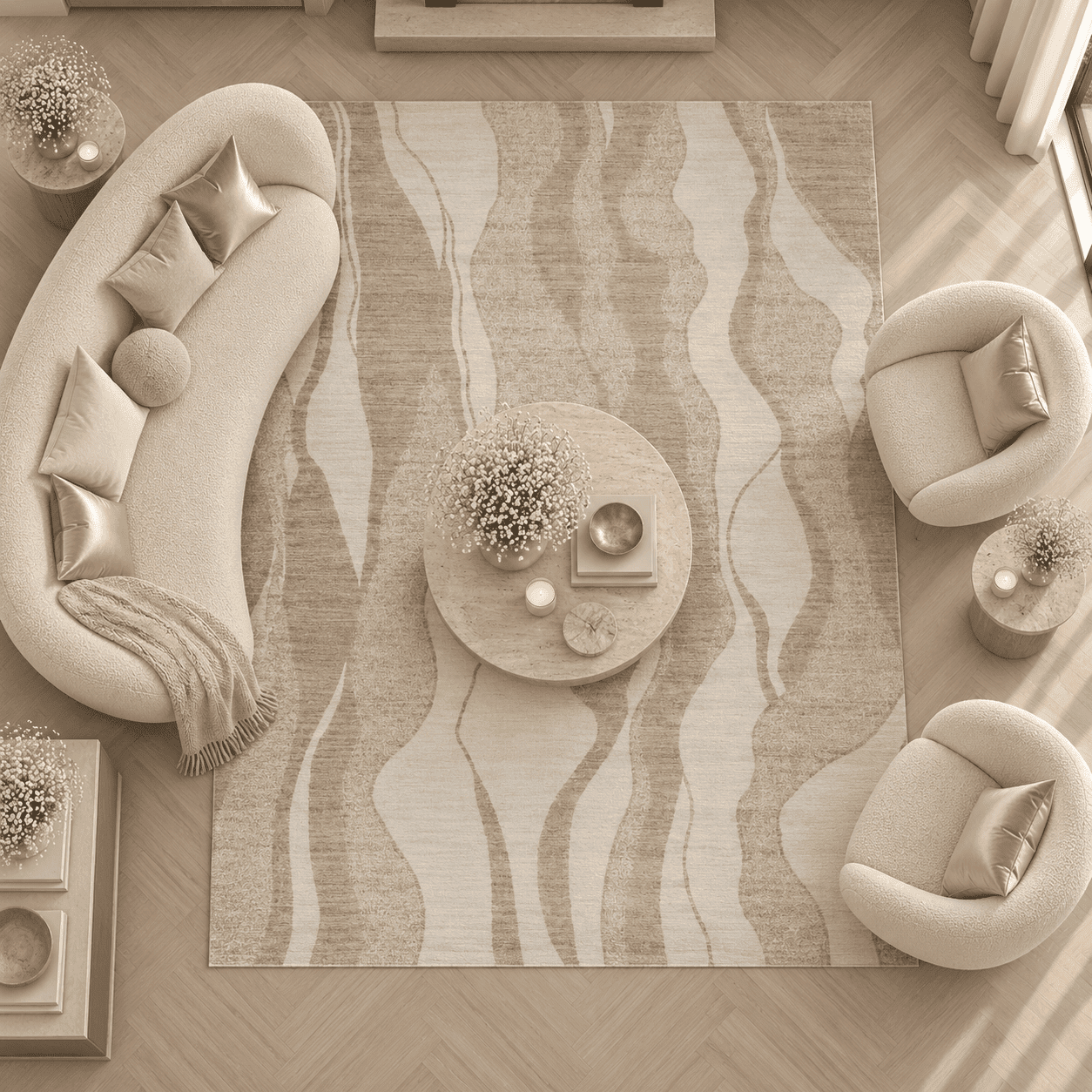
Lecco Beige Wave Effect Abstract Rug, 80x140cmThe Lecco Beige Wave Effect Abstract Rug adds a sense of fluid, organic movement to your floors. This contemporary rug features a captivating wave-like pattern of flowing lines in a sophisticated palette of neutral beige and soft cream. Its subtle, abstract design and plush texture create a calm, inviting atmosphere in any room. Perfect for living areas or bedrooms, this high-end rug offers a luxury finish for modern interiors.59,00 £*Shipping: 4,99 £Secure redirect to the provider




-
Do all quantum objects obey the wave-particle duality?
Yes, all quantum objects exhibit wave-particle duality, which means they can exhibit both wave-like and particle-like behavior. This duality is a fundamental aspect of quantum mechanics and is observed in phenomena such as the double-slit experiment, where particles exhibit interference patterns characteristic of waves. This duality is a key feature of quantum theory and is essential for understanding the behavior of quantum objects. **
-
What is the difference between the wave and the particle model of light?
The wave model of light describes light as a continuous wave with properties such as wavelength, frequency, and amplitude. This model explains phenomena such as interference and diffraction. On the other hand, the particle model of light, also known as the photon model, describes light as a stream of discrete particles called photons. This model explains phenomena such as the photoelectric effect and the emission of light from atoms. The wave model is more suitable for explaining the behavior of light in certain situations, while the particle model is more suitable for explaining other phenomena. **
-
What are the arguments for light as a wave and for light as a particle?
The arguments for light as a wave include its ability to exhibit interference patterns, diffraction, and polarization, which are characteristic behaviors of waves. Additionally, the wave theory of light can explain phenomena such as the Doppler effect and the photoelectric effect. On the other hand, the arguments for light as a particle stem from observations like the photoelectric effect, where light behaves as discrete packets of energy called photons. The particle nature of light is also supported by phenomena like the Compton effect and the quantization of energy levels in atoms. **
-
Light is neither a particle nor a wave, but depending on the experiment it exhibits properties of either a wave or a particle. But what it really is, we do not know.
Light is a complex phenomenon that exhibits both wave-like and particle-like properties. In some experiments, it behaves like a wave, showing interference and diffraction patterns, while in others, it behaves like a particle, interacting with matter in discrete packets of energy called photons. The true nature of light remains a mystery, and it is described by the wave-particle duality principle in quantum mechanics. **

What is the difference between the wave model and the particle model?
The wave model describes light as a wave that travels through space, exhibiting properties like interference and diffraction. In contrast, the particle model views light as a stream of particles called photons that carry energy and momentum. The wave model explains phenomena like interference patterns and polarization, while the particle model helps to understand effects like the photoelectric effect and Compton scattering. Both models are used in different contexts to describe the behavior of light. **
In which year and with which experiment was the wave-particle duality proven?
The wave-particle duality was proven in 1927 through the famous double-slit experiment conducted by physicist Thomas Young. This experiment demonstrated that light exhibits both wave-like and particle-like properties, leading to the development of the concept of wave-particle duality in quantum mechanics. **
Top-Angebote
Products related to Wave-particle:
-
Uplift Essentials Colorful Solar Particle Ball Wind Chime Light Colorful Solar Particle Ball Wind Chime LightElevate your outdoor environment with a highperformance lighting solution that masterfully blends auditory charm with vibrant visual artistry. This colorful solar particle ball wind chime light is the ultimate solution for homeowners and decorators...58,97 $*Shipping: 0,00 $Secure redirect to the provider
-
Inspired Living Hand Wave Sensor Switch For LED Lights 12V 24V Motion Sensor Light Switch Module Hand Wave Sensor Switch For LED Lights 12V 24V Motion Sensor Light Switch ModuleTurn any compatible LED lighting setup into a smarter, more convenient space with this Hand Wave Sensor Switch. Designed for DIY enthusiasts, cabinet makers, RV owners, and home improvement projects, this compact sensor lets you control lights with...23,97 $*Shipping: 0,00 $Secure redirect to the provider
-
What is the wave-particle duality?
Wave-particle duality is a fundamental concept in quantum mechanics that states that particles, such as electrons and photons, can exhibit both wave-like and particle-like behavior. This means that they can behave as waves, with characteristics such as interference and diffraction, and also as particles, with characteristics such as position and momentum. This duality challenges our classical understanding of particles and waves as distinct entities, and is a key aspect of understanding the behavior of matter and energy at the quantum level. **
-
Does the human have particle and wave characteristics?
Yes, humans and all matter have both particle and wave characteristics. This is known as wave-particle duality, a fundamental concept in quantum mechanics. At the quantum level, particles such as electrons and photons can exhibit wave-like behavior, as demonstrated by phenomena like diffraction and interference. This duality is a key aspect of the behavior of matter and energy at the smallest scales of the universe. **
-
Do all quantum objects obey the wave-particle duality?
Yes, all quantum objects exhibit wave-particle duality, which means they can exhibit both wave-like and particle-like behavior. This duality is a fundamental aspect of quantum mechanics and is observed in phenomena such as the double-slit experiment, where particles exhibit interference patterns characteristic of waves. This duality is a key feature of quantum theory and is essential for understanding the behavior of quantum objects. **
-
What is the difference between the wave and the particle model of light?
The wave model of light describes light as a continuous wave with properties such as wavelength, frequency, and amplitude. This model explains phenomena such as interference and diffraction. On the other hand, the particle model of light, also known as the photon model, describes light as a stream of discrete particles called photons. This model explains phenomena such as the photoelectric effect and the emission of light from atoms. The wave model is more suitable for explaining the behavior of light in certain situations, while the particle model is more suitable for explaining other phenomena. **
Similar search terms for Wave-particle
-
Lecco Beige Wave Effect Abstract Rug, 80x140cmThe Lecco Beige Wave Effect Abstract Rug adds a sense of fluid, organic movement to your floors. This contemporary rug features a captivating wave-like pattern of flowing lines in a sophisticated palette of neutral beige and soft cream. Its subtle, abstract design and plush texture create a calm, inviting atmosphere in any room. Perfect for living areas or bedrooms, this high-end rug offers a luxury finish for modern interiors.59,00 £*Shipping: 4,99 £Secure redirect to the provider
-
Anya Beige Abstract Wave Rug, 240 x 170cmThe Anya Beige Abstract Wave Rug introduces a sense of fluid movement to your living space with its graceful, undulating patterns. The sophisticated blend of beige and cream tones creates a serene, contemporary look that complements a variety of interior styles. Designed with both aesthetics and comfort in mind, this rug features a subtle textured finish that feels soft underfoot. It serves as a perfect, durable foundation for modern living rooms or tranquil bedrooms. Material: 30% Wool, 70% Viscose Pile Height: 8mm999,00 £*Shipping: 4,99 £Secure redirect to the provider
-
Lecco Beige Wave Effect Abstract Rug, 120x160cmThe Lecco Beige Wave Effect Abstract Rug adds a sense of fluid, organic movement to your floors. This contemporary rug features a captivating wave-like pattern of flowing lines in a sophisticated palette of neutral beige and soft cream. Its subtle, abstract design and plush texture create a calm, inviting atmosphere in any room. Perfect for living areas or bedrooms, this high-end rug offers a luxury finish for modern interiors.129,00 £*Shipping: 4,99 £Secure redirect to the provider
-
What are the arguments for light as a wave and for light as a particle?
The arguments for light as a wave include its ability to exhibit interference patterns, diffraction, and polarization, which are characteristic behaviors of waves. Additionally, the wave theory of light can explain phenomena such as the Doppler effect and the photoelectric effect. On the other hand, the arguments for light as a particle stem from observations like the photoelectric effect, where light behaves as discrete packets of energy called photons. The particle nature of light is also supported by phenomena like the Compton effect and the quantization of energy levels in atoms. **
-
Light is neither a particle nor a wave, but depending on the experiment it exhibits properties of either a wave or a particle. But what it really is, we do not know.
Light is a complex phenomenon that exhibits both wave-like and particle-like properties. In some experiments, it behaves like a wave, showing interference and diffraction patterns, while in others, it behaves like a particle, interacting with matter in discrete packets of energy called photons. The true nature of light remains a mystery, and it is described by the wave-particle duality principle in quantum mechanics. **
-
What is the difference between the wave model and the particle model?
The wave model describes light as a wave that travels through space, exhibiting properties like interference and diffraction. In contrast, the particle model views light as a stream of particles called photons that carry energy and momentum. The wave model explains phenomena like interference patterns and polarization, while the particle model helps to understand effects like the photoelectric effect and Compton scattering. Both models are used in different contexts to describe the behavior of light. **
-
In which year and with which experiment was the wave-particle duality proven?
The wave-particle duality was proven in 1927 through the famous double-slit experiment conducted by physicist Thomas Young. This experiment demonstrated that light exhibits both wave-like and particle-like properties, leading to the development of the concept of wave-particle duality in quantum mechanics. **
* All prices are inclusive of VAT and, if applicable, plus shipping costs. The offer information is based on the details provided by the respective shop and is updated through automated processes. Real-time updates do not occur, so deviations can occur in individual cases. ** Note: Parts of this content were created by AI.