Buy electric-art.eu ?
We are moving the project
electric-art.eu .
Are you interested in purchasing the domain
electric-art.eu ?
domain@kv-gmbh.de · 0541-91531010
Buy electric-art.eu ?
What is the kinetic energy of heavy electric vehicles?
The kinetic energy of heavy electric vehicles is determined by their mass and velocity. The kinetic energy (KE) of an object is calculated using the formula KE = 0.5 * mass * velocity^2. Therefore, heavy electric vehicles with greater mass and higher velocities will have higher kinetic energy. This kinetic energy is important to consider for the vehicle's braking system and overall safety, as it affects the vehicle's ability to stop and the potential impact in the event of a collision. **
How can one convert light energy into kinetic energy?
One way to convert light energy into kinetic energy is through the use of solar panels. When light energy from the sun hits the solar panels, it is converted into electrical energy. This electrical energy can then be used to power motors or other devices, which in turn can produce kinetic energy. Another way to convert light energy into kinetic energy is through the use of solar thermal systems, where sunlight is used to heat a fluid that then drives a turbine to produce kinetic energy. **

Similar search terms for Kinetic
Top-Angebote
Products related to Kinetic:
-
Uplifted Finds Accordion Morph Kinetic Scratcher Accordion Morph Kinetic ScratcherRevolutionize your pets interaction with the AccordionMorph Kinetic Scratcher, a highengagement geometry module engineered with transformativesurface logic. This professionalgrade toy features a highdensity honeycomb cardboard architecture that...80,97 $*Shipping: 0,00 $Secure redirect to the provider
-
Uplifted Finds High Velocity Kinetic Teaser Hub High Velocity Kinetic Teaser HubOptimize your pets physical agility and predatory reflexes with the HighVelocity Kinetic Teaser Hub, a professionalgrade interactive system engineered with telescopicextension logic. This highutility module features a specialized threesection...40,97 $*Shipping: 0,00 $Secure redirect to the provider
-
Uplifted Finds Apex Sprint Kinetic Hunting Treadmill Apex Sprint Kinetic Hunting TreadmillCombat indoor lethargy and optimize your pets cardiovascular health with the ApexSprint Kinetic Treadmill, a highperformance exercise station engineered with instinctdriven motion logic. This innovative wheel moves beyond standard static treadmills...504,97 $*Shipping: 0,00 $Secure redirect to the provider




-
How is kinetic energy calculated?
Kinetic energy is calculated using the formula: KE = 1/2 * m * v^2, where KE represents kinetic energy, m is the mass of the object in motion, and v is the velocity of the object. This formula shows that kinetic energy is directly proportional to the mass of the object and the square of its velocity. Therefore, an object with a greater mass or higher velocity will have more kinetic energy. **
-
Isn't thermal energy kinetic energy?
Thermal energy is actually a form of internal energy within a system due to the motion of its particles. While kinetic energy is associated with the motion of an object as a whole, thermal energy is related to the random motion of particles within a substance. So, while thermal energy involves kinetic energy at the microscopic level, it is not the same as the kinetic energy of an object in motion. **
-
What is relativistic kinetic energy?
Relativistic kinetic energy is the energy an object possesses due to its motion, taking into account the effects of special relativity. In classical physics, kinetic energy is given by the formula 1/2 mv^2, where m is the mass of the object and v is its velocity. However, at speeds approaching the speed of light, special relativity must be taken into account, and the formula for kinetic energy becomes more complex. The relativistic kinetic energy formula takes into account the increase in an object's mass as it approaches the speed of light, and is given by the formula E = (γ - 1)mc^2, where γ is the Lorentz factor, m is the rest mass of the object, and c is the speed of light. **
-
How do you calculate kinetic energy?
Kinetic energy is calculated using the formula: KE = 0.5 * m * v^2, where KE is the kinetic energy, m is the mass of the object, and v is the velocity of the object. To calculate kinetic energy, you need to know the mass of the object in kilograms and the velocity of the object in meters per second. By plugging these values into the formula, you can determine the kinetic energy of the object in joules. **


Who has the greater kinetic energy?
The object with the greater kinetic energy is the one that has a higher mass and velocity. Kinetic energy is directly proportional to both mass and velocity, so an object with a larger mass or higher velocity will have greater kinetic energy. Therefore, the object with the greater kinetic energy would be the one that is heavier and/or moving faster. **
What is potential or kinetic energy?
Potential energy is the stored energy an object has due to its position or state, such as a ball held above the ground. Kinetic energy is the energy an object possesses due to its motion, like a moving car. Both forms of energy are important in understanding how objects interact and change in the physical world. **
Top-Angebote
Products related to Kinetic:
-
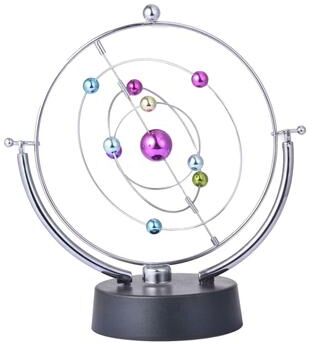
Uplift Picks Perpetual Motion Desk Toy Rotating Celestial Globe Kinetic Decor Perpetual Motion Desk Toy Rotating Celestial Globe Kinetic DecorAdd a touch of wonder and calm to your space with this mesmerizing perpetual motion desk toy. Designed for curious minds and styleconscious spaces, it blends science and art into one elegant piece. The smooth, continuous movement of this kinetic...147,98 $*Shipping: 0,00 $Secure redirect to the provider
-
Uplift Essentials Kinetic Tail 2.0 Smart Motion Ball blue"Bring the thrill of the hunt to your living room with the Kinetic Tail 2.0 Smart Motion Ball. This isn't just a rolling ball; its a hightech ""prey simulator"" designed with an erratic, motorized tail that mimics the unpredictable movements of a..."34,97 $*Shipping: 0,00 $Secure redirect to the provider
-
Uplifted Finds Accordion Morph Kinetic Scratcher Accordion Morph Kinetic ScratcherRevolutionize your pets interaction with the AccordionMorph Kinetic Scratcher, a highengagement geometry module engineered with transformativesurface logic. This professionalgrade toy features a highdensity honeycomb cardboard architecture that...80,97 $*Shipping: 0,00 $Secure redirect to the provider
-
What is the kinetic energy of heavy electric vehicles?
The kinetic energy of heavy electric vehicles is determined by their mass and velocity. The kinetic energy (KE) of an object is calculated using the formula KE = 0.5 * mass * velocity^2. Therefore, heavy electric vehicles with greater mass and higher velocities will have higher kinetic energy. This kinetic energy is important to consider for the vehicle's braking system and overall safety, as it affects the vehicle's ability to stop and the potential impact in the event of a collision. **
-
How can one convert light energy into kinetic energy?
One way to convert light energy into kinetic energy is through the use of solar panels. When light energy from the sun hits the solar panels, it is converted into electrical energy. This electrical energy can then be used to power motors or other devices, which in turn can produce kinetic energy. Another way to convert light energy into kinetic energy is through the use of solar thermal systems, where sunlight is used to heat a fluid that then drives a turbine to produce kinetic energy. **
-
How is kinetic energy calculated?
Kinetic energy is calculated using the formula: KE = 1/2 * m * v^2, where KE represents kinetic energy, m is the mass of the object in motion, and v is the velocity of the object. This formula shows that kinetic energy is directly proportional to the mass of the object and the square of its velocity. Therefore, an object with a greater mass or higher velocity will have more kinetic energy. **
-
Isn't thermal energy kinetic energy?
Thermal energy is actually a form of internal energy within a system due to the motion of its particles. While kinetic energy is associated with the motion of an object as a whole, thermal energy is related to the random motion of particles within a substance. So, while thermal energy involves kinetic energy at the microscopic level, it is not the same as the kinetic energy of an object in motion. **
Similar search terms for Kinetic
-
Uplifted Finds High Velocity Kinetic Teaser Hub High Velocity Kinetic Teaser HubOptimize your pets physical agility and predatory reflexes with the HighVelocity Kinetic Teaser Hub, a professionalgrade interactive system engineered with telescopicextension logic. This highutility module features a specialized threesection...40,97 $*Shipping: 0,00 $Secure redirect to the provider
-
Uplifted Finds Apex Sprint Kinetic Hunting Treadmill Apex Sprint Kinetic Hunting TreadmillCombat indoor lethargy and optimize your pets cardiovascular health with the ApexSprint Kinetic Treadmill, a highperformance exercise station engineered with instinctdriven motion logic. This innovative wheel moves beyond standard static treadmills...504,97 $*Shipping: 0,00 $Secure redirect to the provider
-
Uplift Essentials Kinetic Tail 2.0 Smart Motion Ball orange"Bring the thrill of the hunt to your living room with the Kinetic Tail 2.0 Smart Motion Ball. This isn't just a rolling ball; its a hightech ""prey simulator"" designed with an erratic, motorized tail that mimics the unpredictable movements of a..."34,97 $*Shipping: 0,00 $Secure redirect to the provider
-
Uplift Essentials Kinetic Tail 2.0 Smart Motion Ball green"Bring the thrill of the hunt to your living room with the Kinetic Tail 2.0 Smart Motion Ball. This isn't just a rolling ball; its a hightech ""prey simulator"" designed with an erratic, motorized tail that mimics the unpredictable movements of a..."34,97 $*Shipping: 0,00 $Secure redirect to the provider
-
What is relativistic kinetic energy?
Relativistic kinetic energy is the energy an object possesses due to its motion, taking into account the effects of special relativity. In classical physics, kinetic energy is given by the formula 1/2 mv^2, where m is the mass of the object and v is its velocity. However, at speeds approaching the speed of light, special relativity must be taken into account, and the formula for kinetic energy becomes more complex. The relativistic kinetic energy formula takes into account the increase in an object's mass as it approaches the speed of light, and is given by the formula E = (γ - 1)mc^2, where γ is the Lorentz factor, m is the rest mass of the object, and c is the speed of light. **
-
How do you calculate kinetic energy?
Kinetic energy is calculated using the formula: KE = 0.5 * m * v^2, where KE is the kinetic energy, m is the mass of the object, and v is the velocity of the object. To calculate kinetic energy, you need to know the mass of the object in kilograms and the velocity of the object in meters per second. By plugging these values into the formula, you can determine the kinetic energy of the object in joules. **
-
Who has the greater kinetic energy?
The object with the greater kinetic energy is the one that has a higher mass and velocity. Kinetic energy is directly proportional to both mass and velocity, so an object with a larger mass or higher velocity will have greater kinetic energy. Therefore, the object with the greater kinetic energy would be the one that is heavier and/or moving faster. **
-
What is potential or kinetic energy?
Potential energy is the stored energy an object has due to its position or state, such as a ball held above the ground. Kinetic energy is the energy an object possesses due to its motion, like a moving car. Both forms of energy are important in understanding how objects interact and change in the physical world. **
* All prices are inclusive of VAT and, if applicable, plus shipping costs. The offer information is based on the details provided by the respective shop and is updated through automated processes. Real-time updates do not occur, so deviations can occur in individual cases. ** Note: Parts of this content were created by AI.