Buy electric-art.eu ?
We are moving the project
electric-art.eu .
Are you interested in purchasing the domain
electric-art.eu ?
domain@kv-gmbh.de · 0541-91531010
Buy electric-art.eu ?
What is a finite automaton?
A finite automaton is a mathematical model used to represent a system that processes input and transitions between different states based on that input. It consists of a set of states, a set of input symbols, a transition function that specifies how the automaton moves from one state to another based on the input, a start state, and a set of accepting states. Finite automata are used in computer science and theoretical computer science to model and analyze the behavior of systems that can be in a finite number of states and transition between them based on input. They are used in various applications such as lexical analysis in compilers, pattern matching in text processing, and modeling of digital circuits. **
How do you create a deterministic finite automaton from a non-deterministic pushdown automaton?
To create a deterministic finite automaton (DFA) from a non-deterministic pushdown automaton (PDA), we can use the subset construction method. This involves creating a state in the DFA for each possible combination of states in the PDA. The transitions in the DFA are determined by simulating the behavior of the PDA on each input symbol. If the PDA can be in multiple states at a given time, the DFA will have a state for each combination of those states. The final states of the DFA are determined by whether any of the PDA's possible states are final states. This process results in a deterministic finite automaton that simulates the behavior of the original non-deterministic pushdown automaton. **


Similar search terms for Automaton
Top-Angebote
Products related to Automaton:
-
Uplift Essentials Automatic Lifting Cat Toy Ball Interactive Electric Cat Toy With Smart Motion Sensor Replaceable Ball Automatic Lifting Cat Toy Ball Interactive Electric Cat Toy With Smart Motion Sensor Replaceable BallKeep your feline friend entertained all day with the Automatic Lifting Cat Toy Ball, the smart way to stimulate your cats hunting instincts and relieve boredom. Designed for independent play, this interactive electric toy clips onto desks, shelves,...41,97 $*Shipping: 0,00 $Secure redirect to the provider
-
Inspired Finds Interactive Electric Lifting Ball Cat Toy With Automatic Retractable Motion replace BallKeep your feline entertained with a smart and engaging interactive cat toy designed to stimulate natural hunting instincts. This innovative automatic cat ball toy features rotating movement and an automatic retractable teasing mechanism that creates...34,99 $*Shipping: 0,00 $Secure redirect to the provider
-
Uplift Picks Musical Dancing Duck Toy Electric Light Up Interactive Baby Toy Musical Dancing Duck Toy Electric Light Up Interactive Baby ToyBring smiles, movement, and music into playtime with this musical duck toy designed to entertain and engage young children. This electric interactive toy lights up, plays cheerful sounds, and dances to capture attention and encourage active play....88,00 $*Shipping: 0,00 $Secure redirect to the provider
-
Uplifted Finds Solar Pendant Light With Motion Sensor LED Digital Display single HeadIlluminate your outdoor or indoor spaces with this versatile solar pendant light featuring a builtin motion sensor, LED display, and remote control functionality. Designed for barn, garage, shed, or patio use, it works day or night and offers...760,97 $*Shipping: 0,00 $Secure redirect to the provider




-
How do you enter the state transition diagram of an automaton into an automaton table?
To enter the state transition diagram of an automaton into an automaton table, you first list all the states of the automaton as rows in the table. Then, list all the input symbols as columns in the table. For each state and input symbol pair, fill in the corresponding cell with the next state that the automaton transitions to. Repeat this process for all state and input symbol pairs until the entire transition diagram is represented in the automaton table. **
-
How do you transfer the state transition diagram of an automaton into an automaton table?
To transfer the state transition diagram of an automaton into an automaton table, you need to list all the states of the automaton as rows in the table. Then, list all the input symbols as columns in the table. Fill in the table with the corresponding next state for each combination of current state and input symbol based on the transitions in the state transition diagram. Finally, indicate the initial state and any final states in the table. This table can then be used to simulate the behavior of the automaton for different input sequences. **
-
How does a non-deterministic finite automaton work?
A non-deterministic finite automaton (NFA) is a theoretical model of computation that consists of a set of states, a set of input symbols, a transition function, an initial state, and a set of accepting states. Unlike a deterministic finite automaton (DFA), an NFA can have multiple possible transitions from a given state on a given input symbol. When processing input, an NFA can be in multiple states simultaneously and can transition to multiple states at once. It accepts a given input string if there exists at least one path through the states that leads to an accepting state. NFAs are often used in theoretical computer science to model certain types of computations and are a key concept in the theory of formal languages and automata. **
-
How does a deterministic finite automaton (DFA) work?
A deterministic finite automaton (DFA) is a mathematical model used to recognize patterns in strings of symbols. It consists of a finite set of states, a finite set of input symbols, a transition function that maps a state and an input symbol to another state, a start state, and a set of accepting states. The DFA starts in the start state and reads input symbols one at a time, transitioning between states according to the transition function. Once the input is fully processed, the DFA is in a final state, and if that state is an accepting state, the input is accepted; otherwise, it is rejected. DFAs are used in various applications, such as lexical analysis in compilers and pattern matching in text processing. **
What is a deterministic finite automaton in computer science?
A deterministic finite automaton (DFA) is a type of finite state machine in computer science. It consists of a set of states, a set of input symbols, a transition function that maps states and input symbols to other states, a start state, and a set of accepting states. DFAs are used to recognize patterns in input strings by transitioning between states based on the input symbols. They are simpler than nondeterministic finite automata (NFAs) as they have a unique transition for each input symbol in each state. **
What is a cellar automaton in theoretical computer science?
A cellar automaton is a type of cellular automaton in theoretical computer science. Cellular automata are discrete models studied in computer science and mathematics, consisting of a grid of cells, each of which can be in a finite number of states. The state of each cell evolves over time according to a set of rules based on the states of neighboring cells. In a cellar automaton, the grid is arranged in a three-dimensional lattice, and the state of each cell is updated based on the states of its six neighboring cells. Cellar automata are used to study complex systems and emergent behavior in various fields, including physics, biology, and computer science. **
Top-Angebote
Products related to Automaton:
-
Inspire Essentials GlowPounce Interactive Motion Light Ball For Cats GlowPounce Interactive Motion Light Ball For CatsTurn ordinary playtime into an exciting chase your cat will love with this interactive cat toy designed to keep pets active and entertained. The motion activated flashing lights instantly grab your cats attention, encouraging natural hunting,...34,98 $*Shipping: 0,00 $Secure redirect to the provider
-
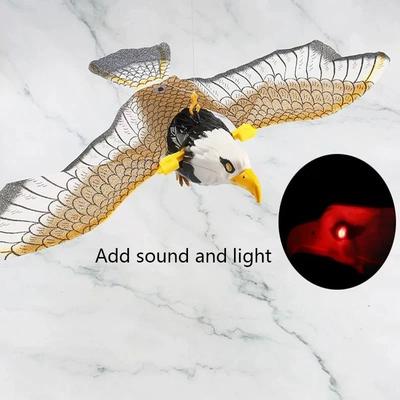
Inspired Finds Interactive Electric Flying Bird Cat Toy With Realistic Flapping Motion eagleBring the excitement of the outdoors inside with this engaging interactive cat toy designed to stimulate your cat's natural hunting instincts. Featuring a realistic flying bird design with flapping wings and lifelike movement, this toy captures your...34,99 $*Shipping: 0,00 $Secure redirect to the provider
-
Uplift Essentials Automatic Lifting Cat Toy Ball Interactive Electric Cat Toy With Smart Motion Sensor Replaceable Ball Automatic Lifting Cat Toy Ball Interactive Electric Cat Toy With Smart Motion Sensor Replaceable BallKeep your feline friend entertained all day with the Automatic Lifting Cat Toy Ball, the smart way to stimulate your cats hunting instincts and relieve boredom. Designed for independent play, this interactive electric toy clips onto desks, shelves,...41,97 $*Shipping: 0,00 $Secure redirect to the provider
-
Inspired Finds Interactive Electric Lifting Ball Cat Toy With Automatic Retractable Motion replace BallKeep your feline entertained with a smart and engaging interactive cat toy designed to stimulate natural hunting instincts. This innovative automatic cat ball toy features rotating movement and an automatic retractable teasing mechanism that creates...34,99 $*Shipping: 0,00 $Secure redirect to the provider
-
What is a finite automaton?
A finite automaton is a mathematical model used to represent a system that processes input and transitions between different states based on that input. It consists of a set of states, a set of input symbols, a transition function that specifies how the automaton moves from one state to another based on the input, a start state, and a set of accepting states. Finite automata are used in computer science and theoretical computer science to model and analyze the behavior of systems that can be in a finite number of states and transition between them based on input. They are used in various applications such as lexical analysis in compilers, pattern matching in text processing, and modeling of digital circuits. **
-
How do you create a deterministic finite automaton from a non-deterministic pushdown automaton?
To create a deterministic finite automaton (DFA) from a non-deterministic pushdown automaton (PDA), we can use the subset construction method. This involves creating a state in the DFA for each possible combination of states in the PDA. The transitions in the DFA are determined by simulating the behavior of the PDA on each input symbol. If the PDA can be in multiple states at a given time, the DFA will have a state for each combination of those states. The final states of the DFA are determined by whether any of the PDA's possible states are final states. This process results in a deterministic finite automaton that simulates the behavior of the original non-deterministic pushdown automaton. **
-
How do you enter the state transition diagram of an automaton into an automaton table?
To enter the state transition diagram of an automaton into an automaton table, you first list all the states of the automaton as rows in the table. Then, list all the input symbols as columns in the table. For each state and input symbol pair, fill in the corresponding cell with the next state that the automaton transitions to. Repeat this process for all state and input symbol pairs until the entire transition diagram is represented in the automaton table. **
-
How do you transfer the state transition diagram of an automaton into an automaton table?
To transfer the state transition diagram of an automaton into an automaton table, you need to list all the states of the automaton as rows in the table. Then, list all the input symbols as columns in the table. Fill in the table with the corresponding next state for each combination of current state and input symbol based on the transitions in the state transition diagram. Finally, indicate the initial state and any final states in the table. This table can then be used to simulate the behavior of the automaton for different input sequences. **
Similar search terms for Automaton
-
Uplift Picks Musical Dancing Duck Toy Electric Light Up Interactive Baby Toy Musical Dancing Duck Toy Electric Light Up Interactive Baby ToyBring smiles, movement, and music into playtime with this musical duck toy designed to entertain and engage young children. This electric interactive toy lights up, plays cheerful sounds, and dances to capture attention and encourage active play....88,00 $*Shipping: 0,00 $Secure redirect to the provider
-
Uplifted Finds Solar Pendant Light With Motion Sensor LED Digital Display single HeadIlluminate your outdoor or indoor spaces with this versatile solar pendant light featuring a builtin motion sensor, LED display, and remote control functionality. Designed for barn, garage, shed, or patio use, it works day or night and offers...760,97 $*Shipping: 0,00 $Secure redirect to the provider
-
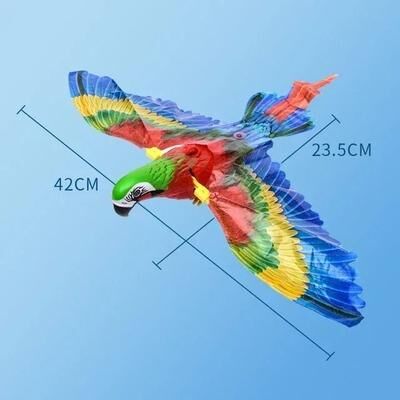
Inspired Finds Interactive Electric Flying Bird Cat Toy With Realistic Flapping Motion parrotBring the excitement of the outdoors inside with this engaging interactive cat toy designed to stimulate your cat's natural hunting instincts. Featuring a realistic flying bird design with flapping wings and lifelike movement, this toy captures your...34,99 $*Shipping: 0,00 $Secure redirect to the provider
-
Inspired Finds Interactive Electric Flying Bird Cat Toy With Realistic Flapping Motion eagle upgradedBring the excitement of the outdoors inside with this engaging interactive cat toy designed to stimulate your cat's natural hunting instincts. Featuring a realistic flying bird design with flapping wings and lifelike movement, this toy captures your...34,99 $*Shipping: 0,00 $Secure redirect to the provider
-
How does a non-deterministic finite automaton work?
A non-deterministic finite automaton (NFA) is a theoretical model of computation that consists of a set of states, a set of input symbols, a transition function, an initial state, and a set of accepting states. Unlike a deterministic finite automaton (DFA), an NFA can have multiple possible transitions from a given state on a given input symbol. When processing input, an NFA can be in multiple states simultaneously and can transition to multiple states at once. It accepts a given input string if there exists at least one path through the states that leads to an accepting state. NFAs are often used in theoretical computer science to model certain types of computations and are a key concept in the theory of formal languages and automata. **
-
How does a deterministic finite automaton (DFA) work?
A deterministic finite automaton (DFA) is a mathematical model used to recognize patterns in strings of symbols. It consists of a finite set of states, a finite set of input symbols, a transition function that maps a state and an input symbol to another state, a start state, and a set of accepting states. The DFA starts in the start state and reads input symbols one at a time, transitioning between states according to the transition function. Once the input is fully processed, the DFA is in a final state, and if that state is an accepting state, the input is accepted; otherwise, it is rejected. DFAs are used in various applications, such as lexical analysis in compilers and pattern matching in text processing. **
-
What is a deterministic finite automaton in computer science?
A deterministic finite automaton (DFA) is a type of finite state machine in computer science. It consists of a set of states, a set of input symbols, a transition function that maps states and input symbols to other states, a start state, and a set of accepting states. DFAs are used to recognize patterns in input strings by transitioning between states based on the input symbols. They are simpler than nondeterministic finite automata (NFAs) as they have a unique transition for each input symbol in each state. **
-
What is a cellar automaton in theoretical computer science?
A cellar automaton is a type of cellular automaton in theoretical computer science. Cellular automata are discrete models studied in computer science and mathematics, consisting of a grid of cells, each of which can be in a finite number of states. The state of each cell evolves over time according to a set of rules based on the states of neighboring cells. In a cellar automaton, the grid is arranged in a three-dimensional lattice, and the state of each cell is updated based on the states of its six neighboring cells. Cellar automata are used to study complex systems and emergent behavior in various fields, including physics, biology, and computer science. **
* All prices are inclusive of VAT and, if applicable, plus shipping costs. The offer information is based on the details provided by the respective shop and is updated through automated processes. Real-time updates do not occur, so deviations can occur in individual cases. ** Note: Parts of this content were created by AI.